Dive Sites in Tulamben, Bali
From world-famous wrecks to hidden macro gems and boat-accessible pinnacles, Tulamben offers something for every diver.
Shore Entry
Signature Dive Sites
The iconic sites that put Tulamben on the map, accessible directly from shore
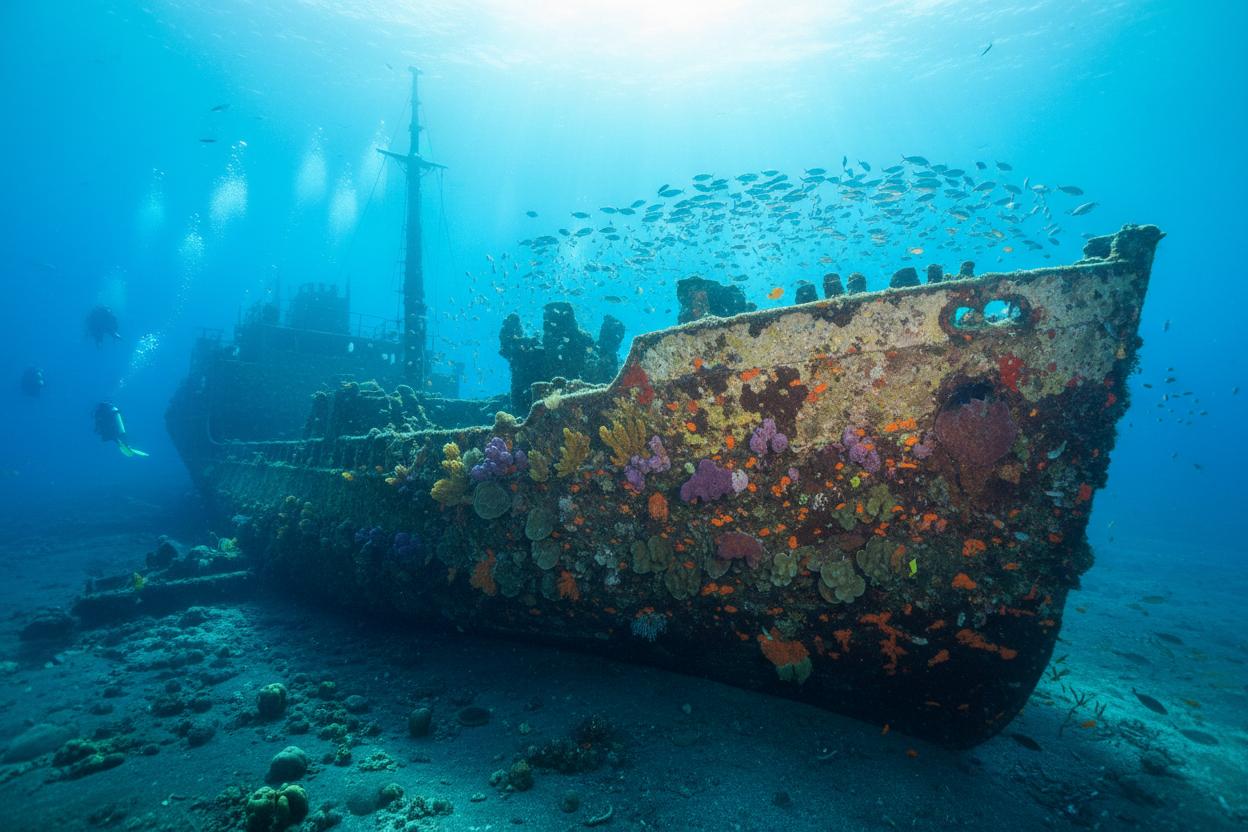
USAT Liberty Wreck
The crown jewel of Tulamben. This 120-meter WWII cargo ship lies just 30 meters from shore, creating an incredible artificial reef teeming with marine life. Torpedoed by the Japanese in 1942 and swept into the ocean by the 1963 Mount Agung eruption, the wreck is now completely encrusted in corals, anemones, and gorgonians. Schools of big-eye trevally, bumphead parrotfish, and the occasional whale shark patrol the hull.
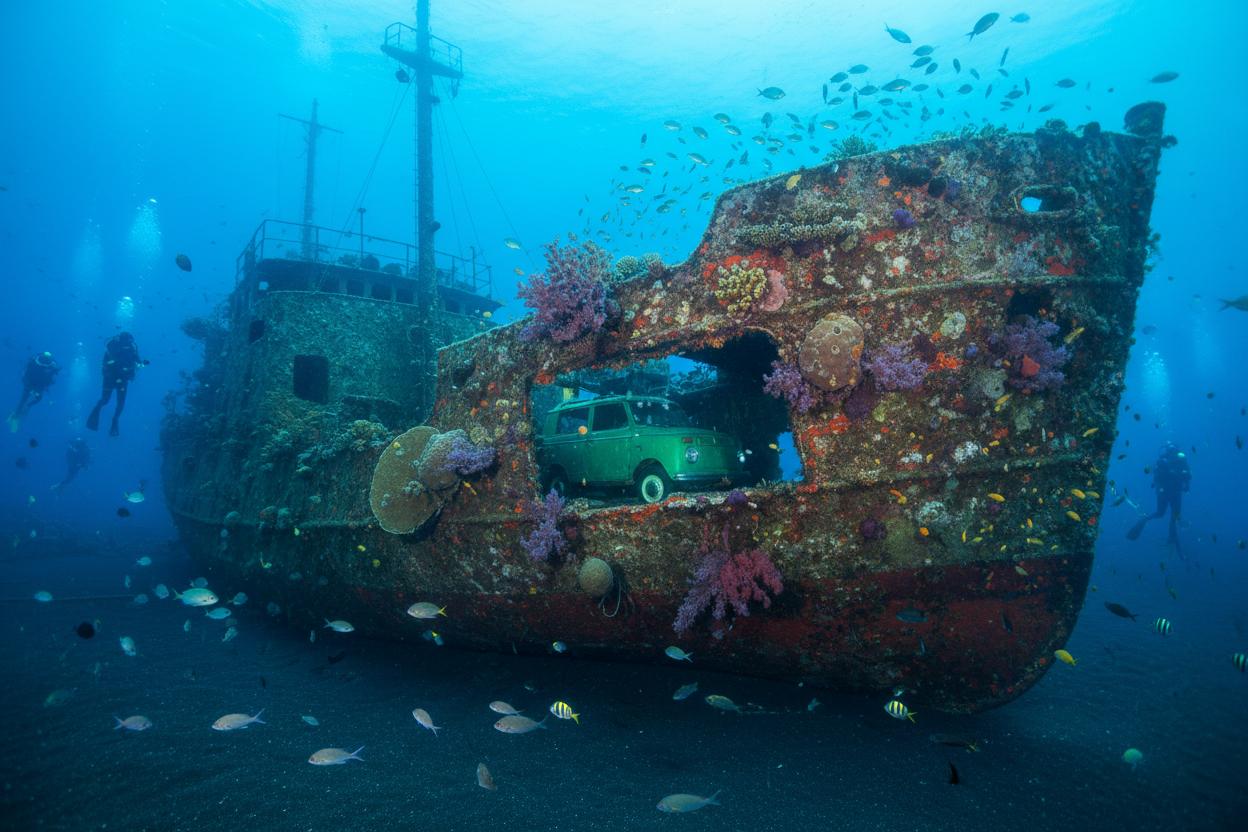
Boga Wreck
A 40-meter decommissioned coast guard vessel intentionally sunk in 2012 as an artificial reef in Kubu, just north of Tulamben. Resting upright on the black sand slope, the Boga offers excellent wreck penetration with three decks to explore. The signature highlight is a classic Volkswagen Safari car sitting in the cargo hold. Soft corals and schools of snapper have made this wreck their home.
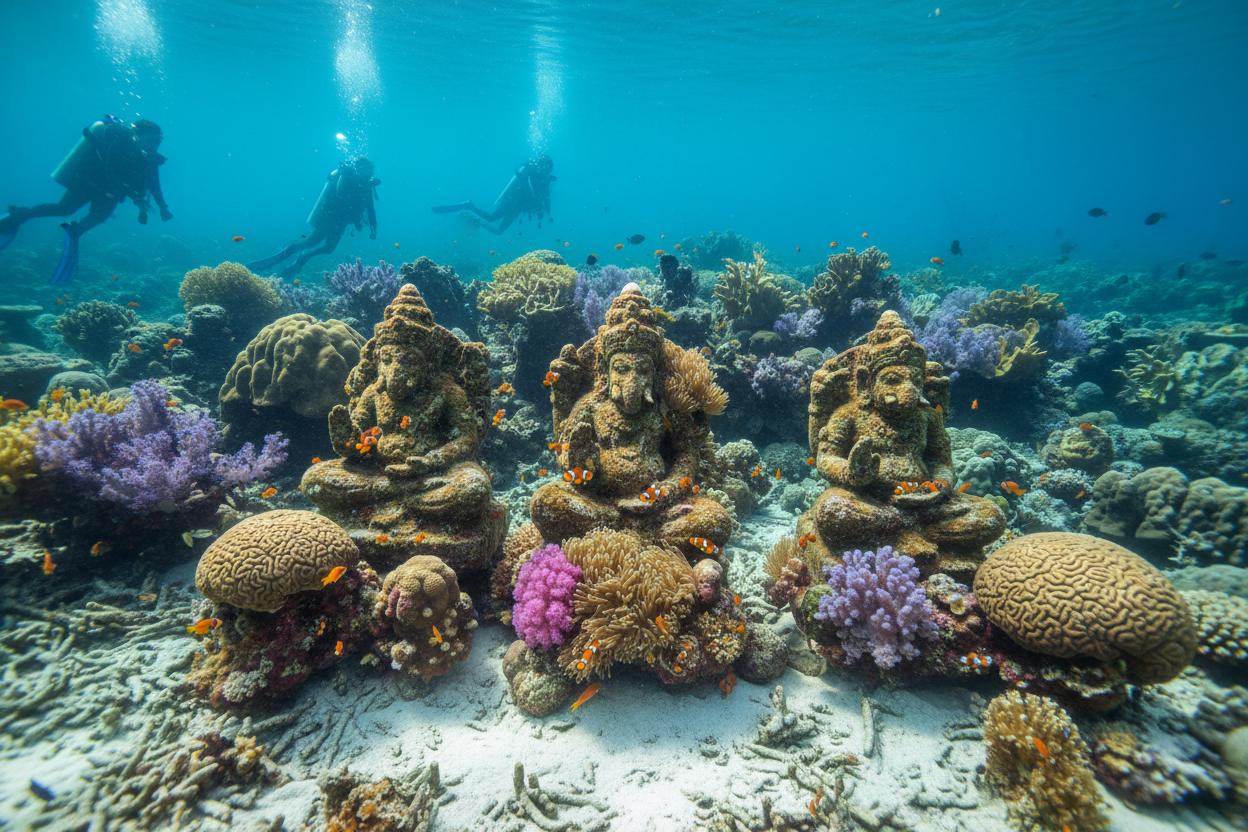
Coral Garden
A vibrant coral paradise perfect for beginners, snorkelers, and photographers. Home to an underwater temple garden with statues draped in soft corals. The site is famous for its anemonefish (Nemo) colonies, ribbon eels, and ghost pipefish hiding among the corals. Pygmy seahorses and a dazzling variety of nudibranchs reward careful observers.
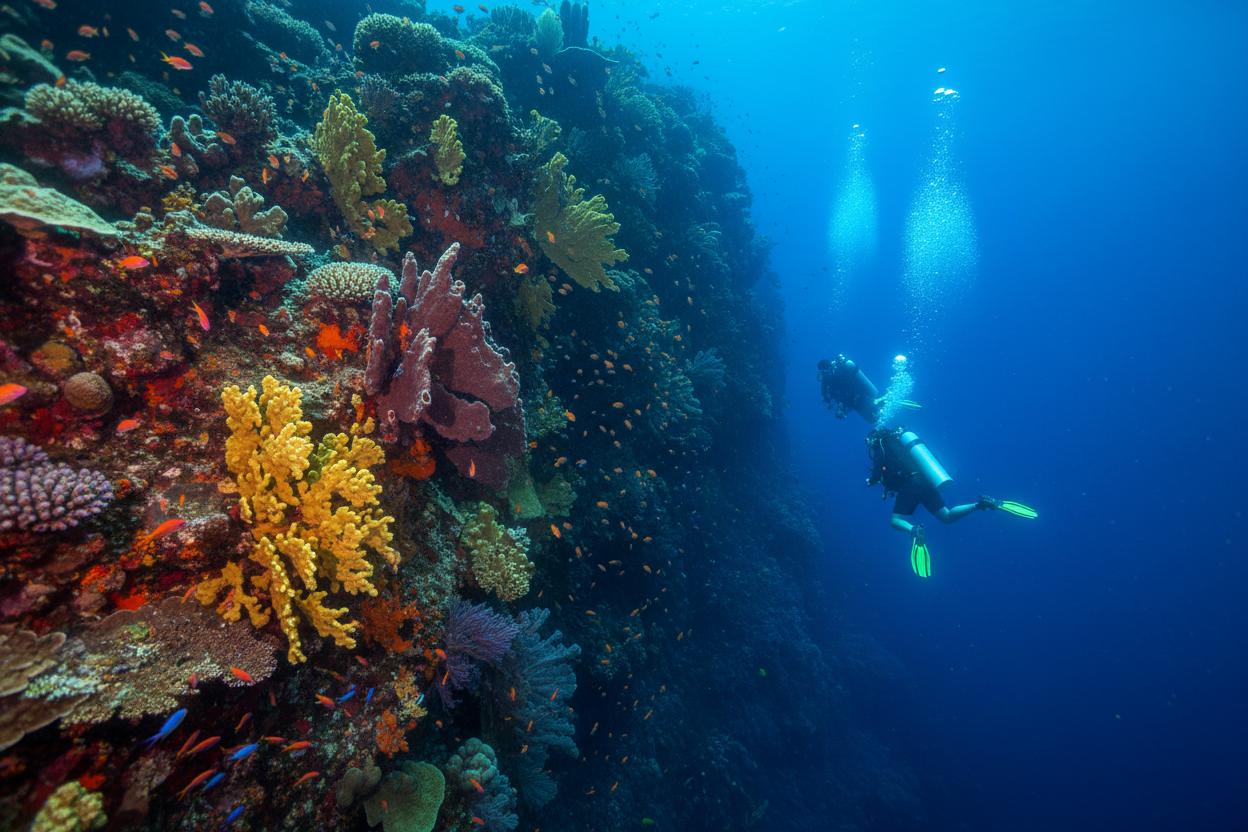
The Drop-Off
A dramatic wall dive formed from ancient lava flow during the 1963 Mount Agung eruption. The steep underwater cliff drops from just meters below the surface to over 70 meters deep. The wall is covered in sponges, sea fans, and vibrant coral growth. Turtles cruise by, reef sharks patrol the depths, and pygmy seahorses hide among the gorgonians. A versatile site suitable for both beginners staying shallow and advanced divers exploring deep.
Shore Entry
Macro & Muck Diving
World-renowned black sand slopes where patient eyes discover the tiniest wonders
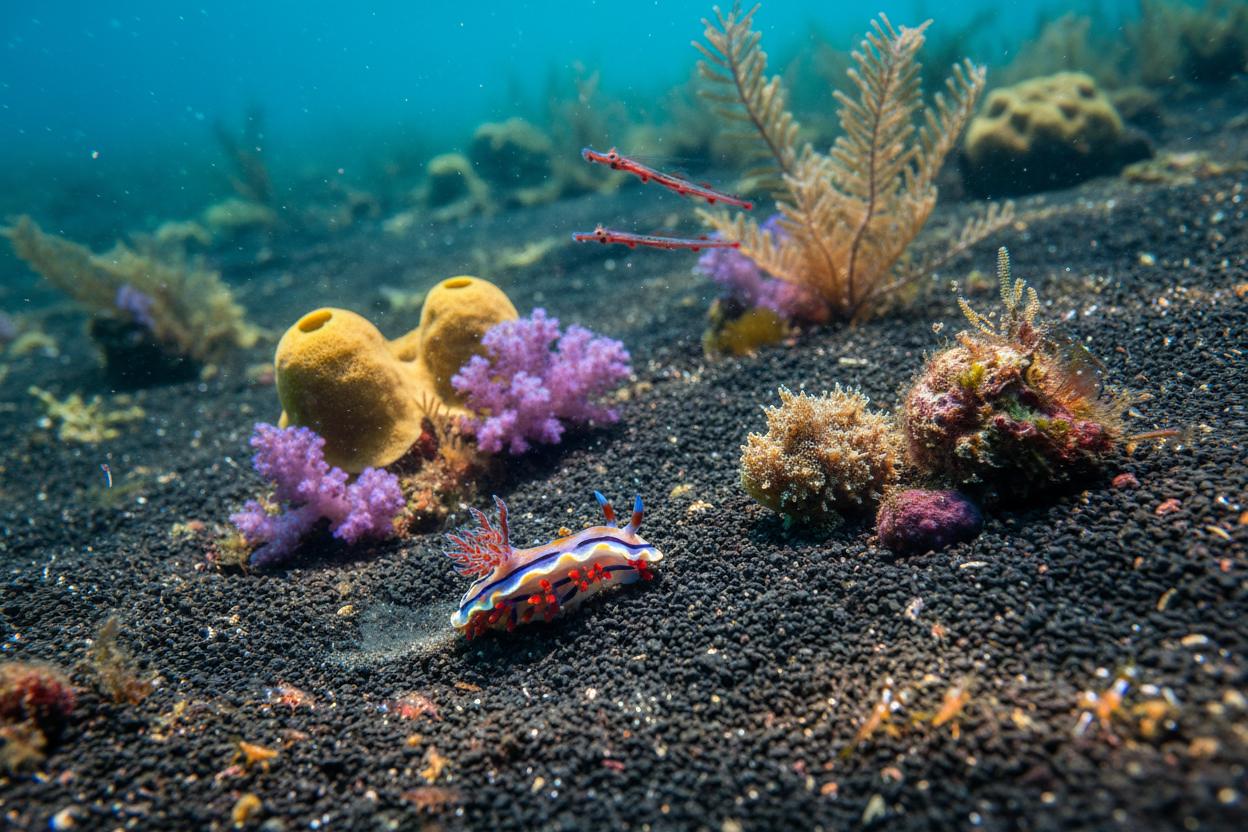
Gerombong
The northernmost dive site in Tulamben and currently the most popular macro hotspot. Gerombong features two distinct reef sections separated by a transitional rocky slope with a sandy muck zone on one side and a beautiful reef with a small wall and cavern on the other. The highest nudibranch diversity of any Tulamben site, plus frogfish, broadclub cuttlefish, peacock mantis shrimp, boxer crabs, and orang-utan crabs.
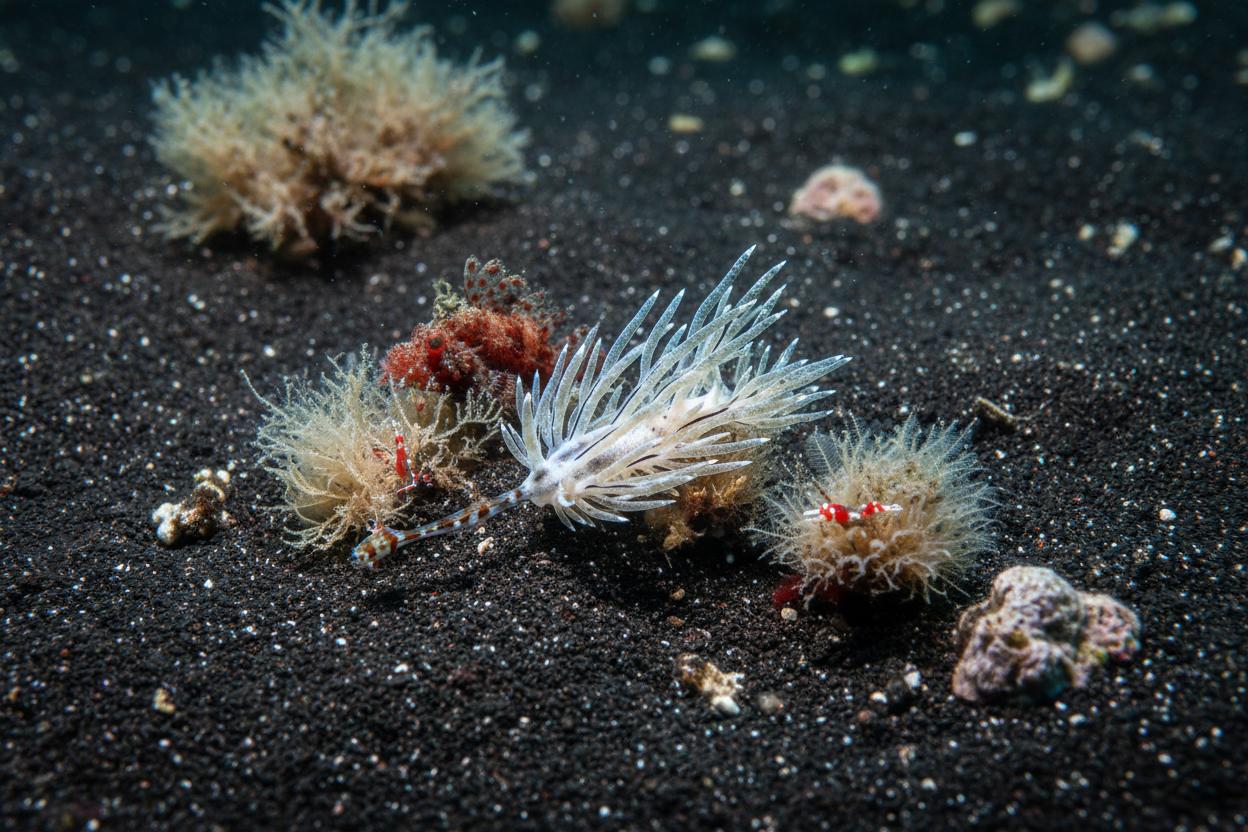
Batu Ringgit
Located north of Tulamben in Kubu village, Batu Ringgit has emerged as the latest macro hotspot among passionate underwater photographers. Its volcanic sandy slopes are very similar to Batu Niti, but the real treasure lies deeper at 28-30m among white hydroid patches where the rare Iriomote Phyllodesmium, a large and elegant nudibranch found almost exclusively here. Also home to leaf scorpionfish, ghost pipefish, and emperor shrimp.
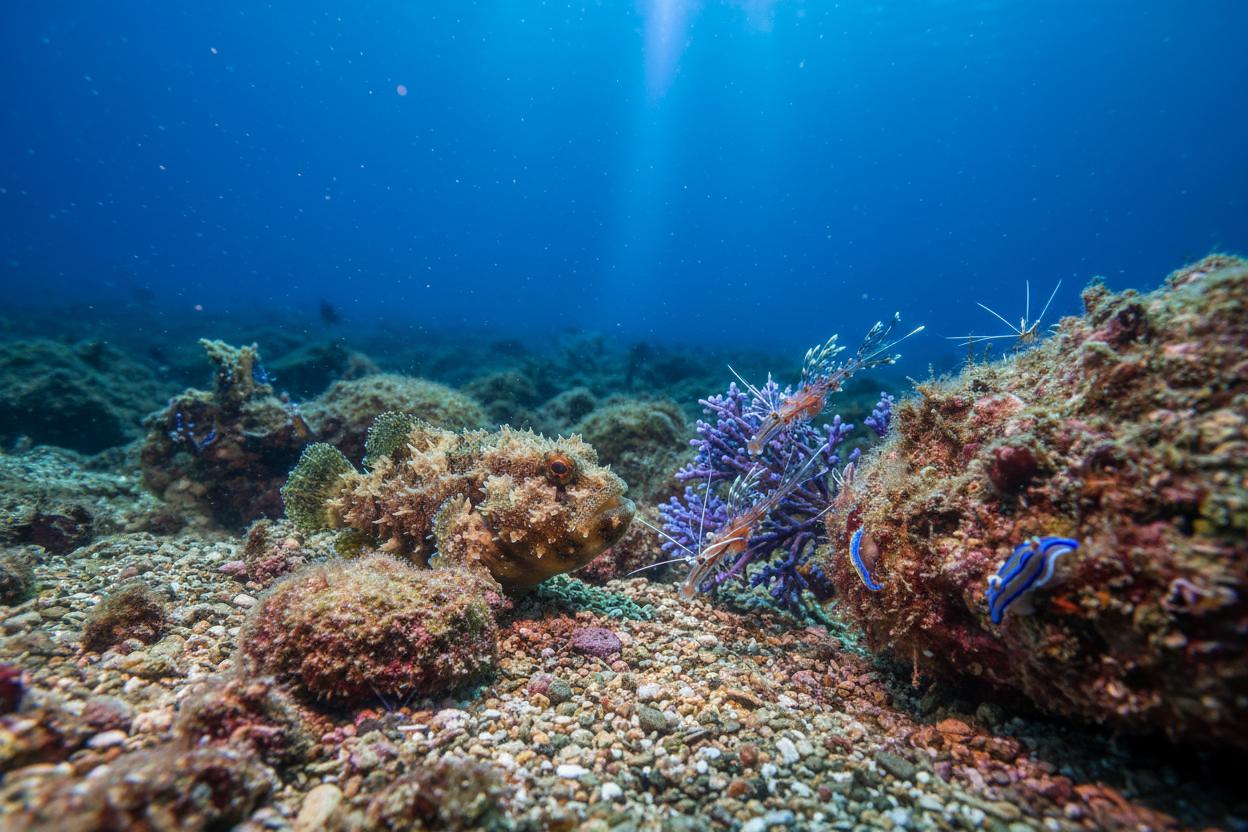
Cantik Point
A macro diver's paradise with a mixed sandy and rocky seabed that creates ideal habitat for a fascinating array of critters. Frogfish, ghost pipefish, and tiny shrimp are the stars here. Excellent visibility makes Cantik Point a prime location for detailed macro observation and underwater photography. Guides know exactly where to find the most camouflaged creatures.
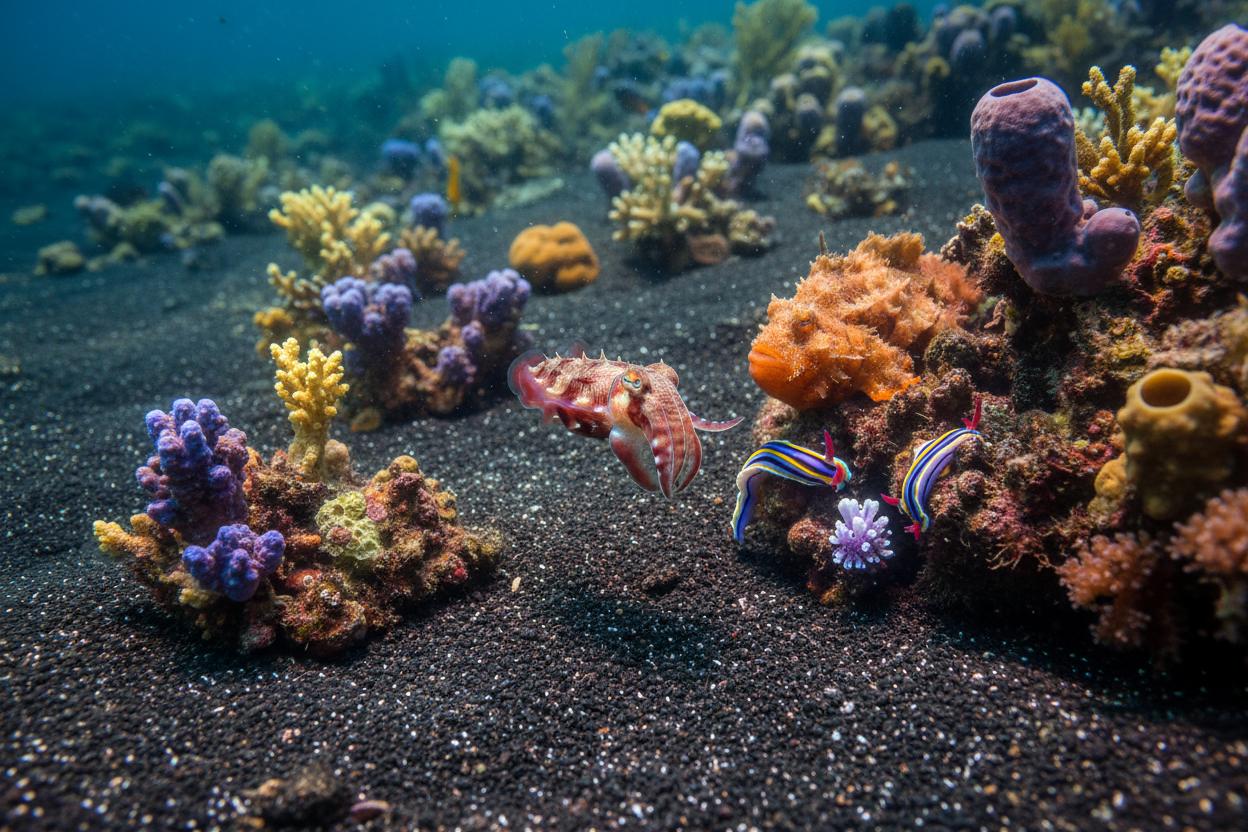
Melasti
Close to Seraya, Melasti is a fast-growing favorite in Bali's macro diving scene. A sloping black sand seabed dotted with coral clusters and sponges creates the perfect environment for rare critter hunting. Divers regularly encounter ghost pipefish, multiple species of frogfish, and an extraordinary variety of rare nudibranchs. The calm conditions make it ideal for long, steady, focused dives.
Kwanji
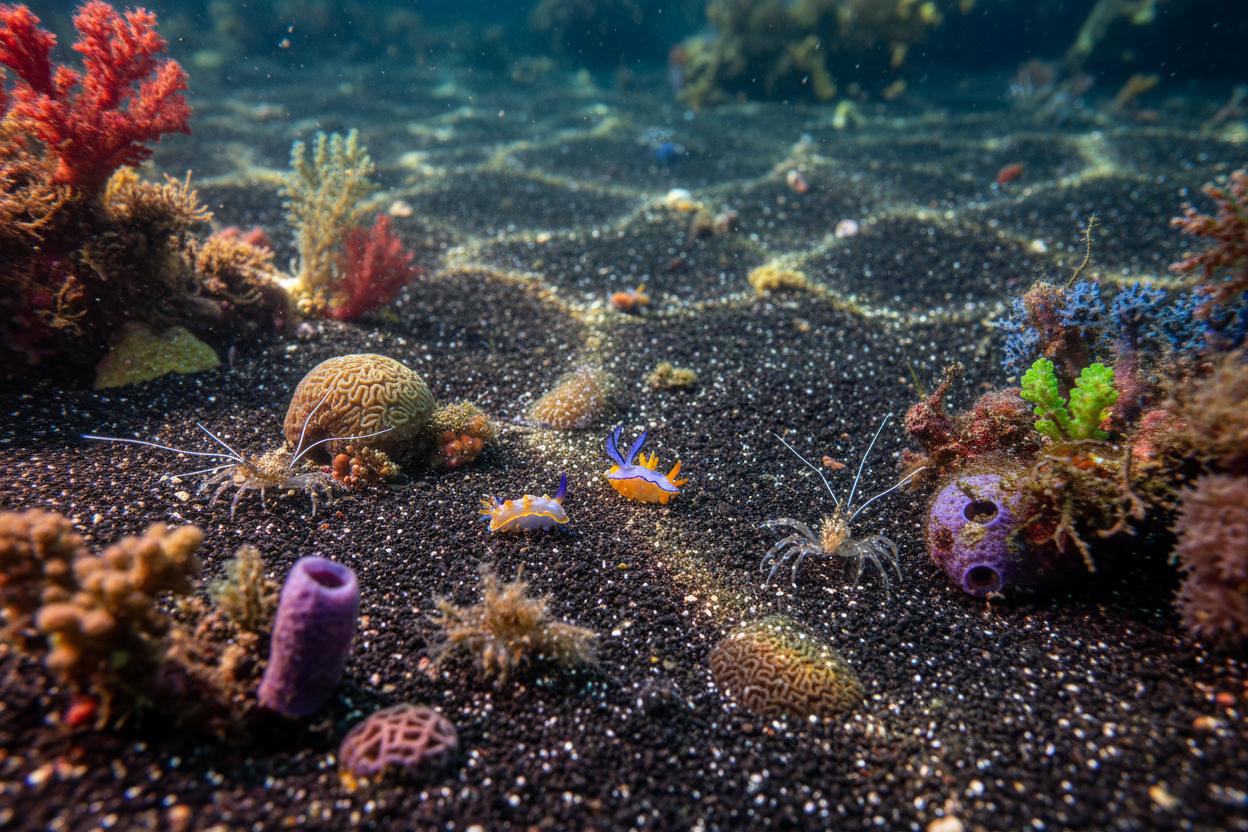
Also known locally as "Big Tree," Kwanji offers three distinct zones to explore: the left side, the front of the beach, and the right side. At one spot, nudibranchs, crabs, and shrimp gather in such density it feels like a critter party. Kwanji is also an excellent night dive site. A local warung on the beach can prepare a fresh mahi-mahi BBQ lunch, just order before your second dive.
Seraya Secrets
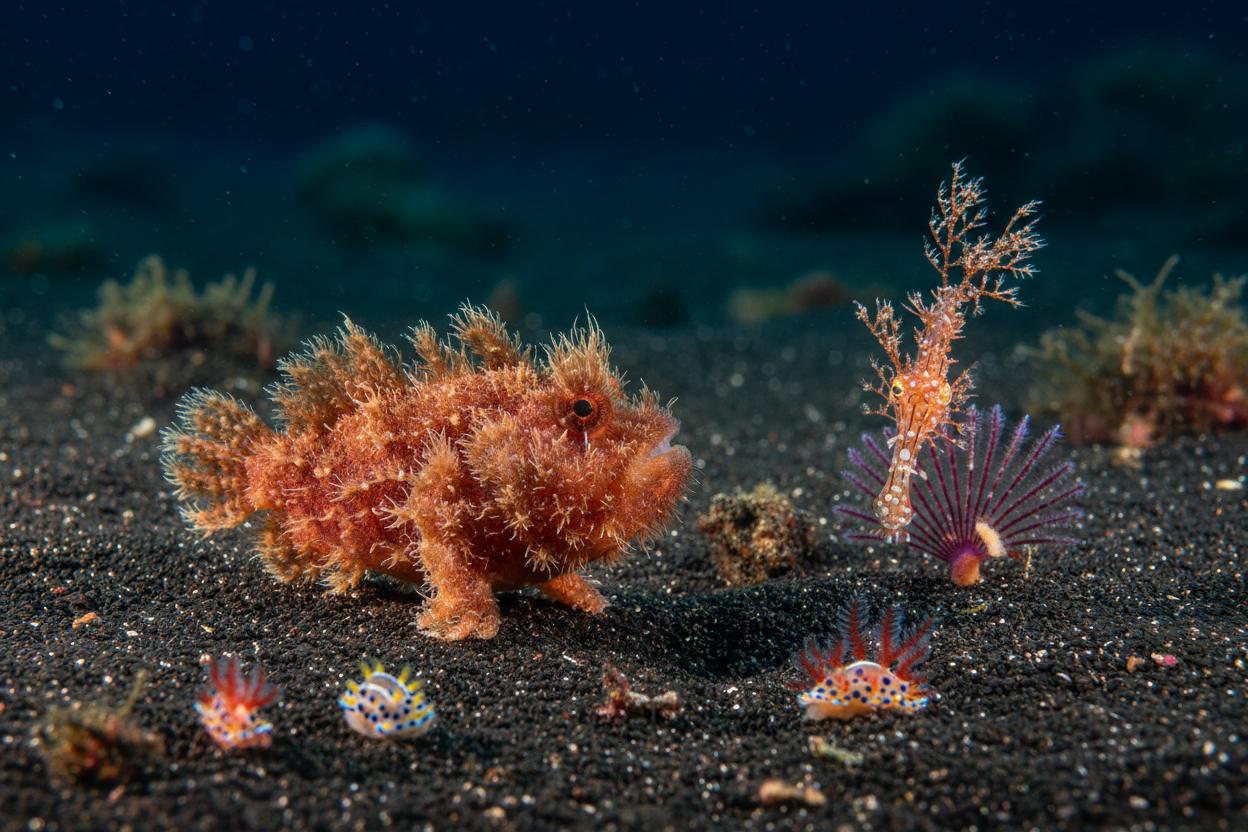
World-famous among the underwater photography community, Seraya Secrets is the classic muck dive experience. Divers slowly scour the dark volcanic sand for rare and exotic species. Reliable sightings include the highly intelligent mimic octopus, harlequin shrimp, hairy frogfish, thorny seahorses, and the delicate ornate ghost pipefish. Pygmy seahorses and countless nudibranch species complete the experience.
Batu Niti
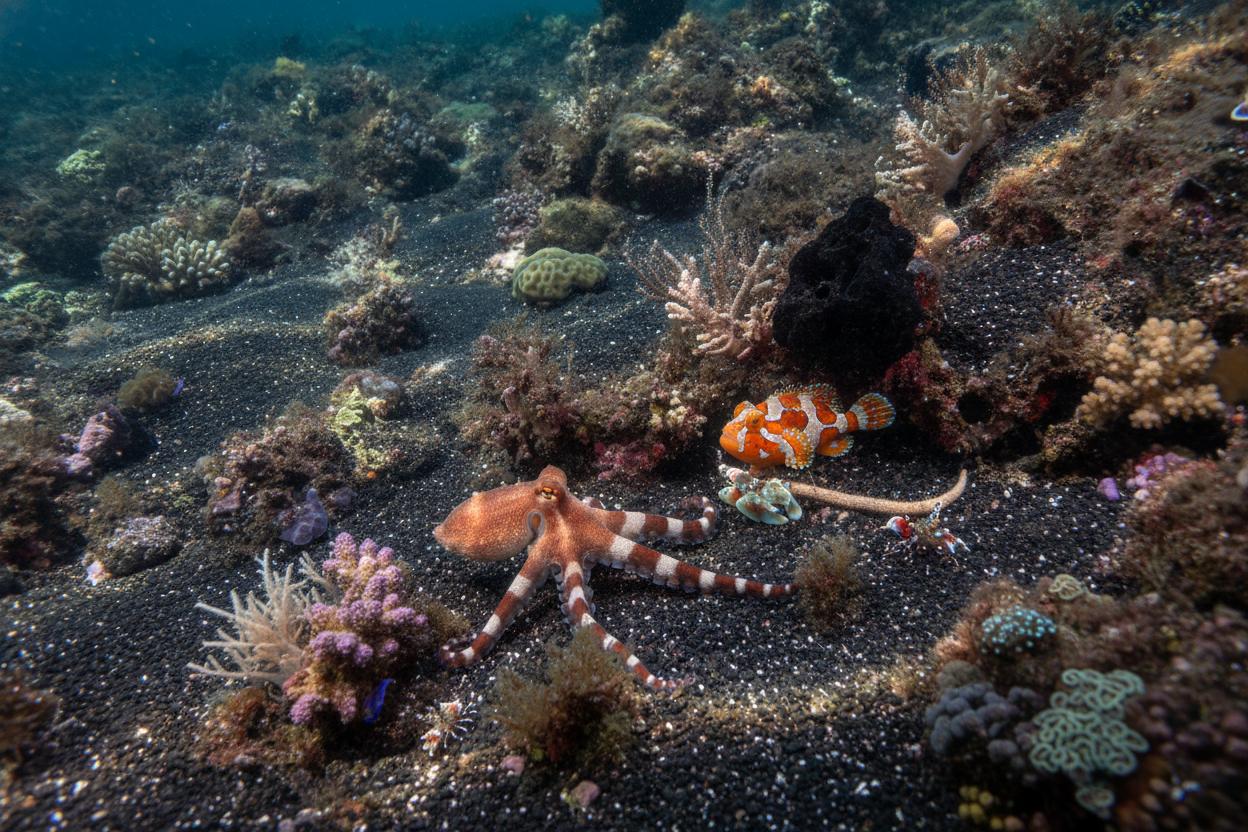
A quiet macro-focused gem nestled between Seraya and Sidem. Batu Niti's slightly rockier terrain features small coral patches, hydroids, and rocky ledges that harbor incredible diversity. The best critter list includes wonderpus octopus, painted frogfish, harlequin ghost pipefish, harlequin shrimp, and an astonishing variety of nudibranchs. An excellent second dive after Seraya or a peaceful alternative when other sites are busy.
Batu Belah
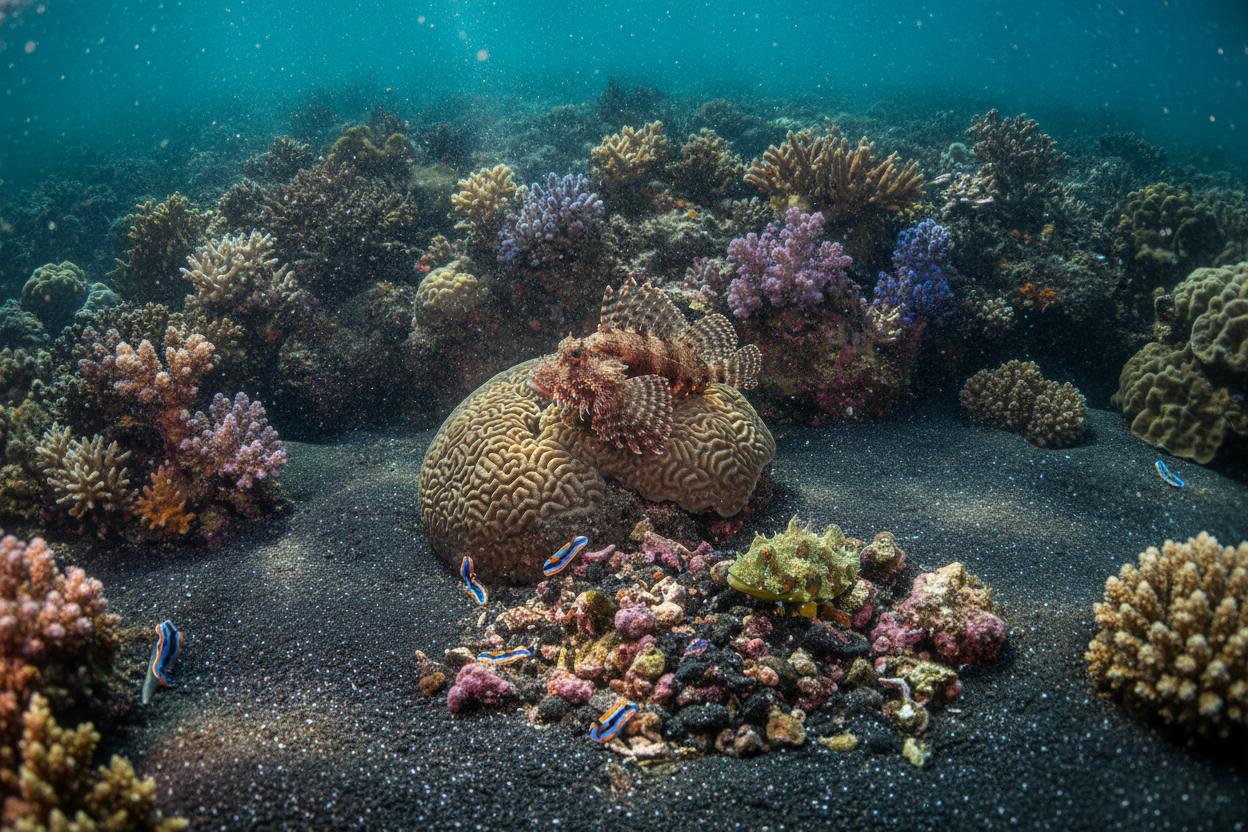
Located just south of Tulamben Bay, Batu Belah ("Split Rock") features dark volcanic sand with large, distinctive coral bommies scattered across the seabed. A paradise for underwater photographers and macro lovers, this site rewards patient divers with scorpionfish perfectly camouflaged on coral clumps, rare nudibranchs crawling across the sand, and frogfish lurking among the rubble.
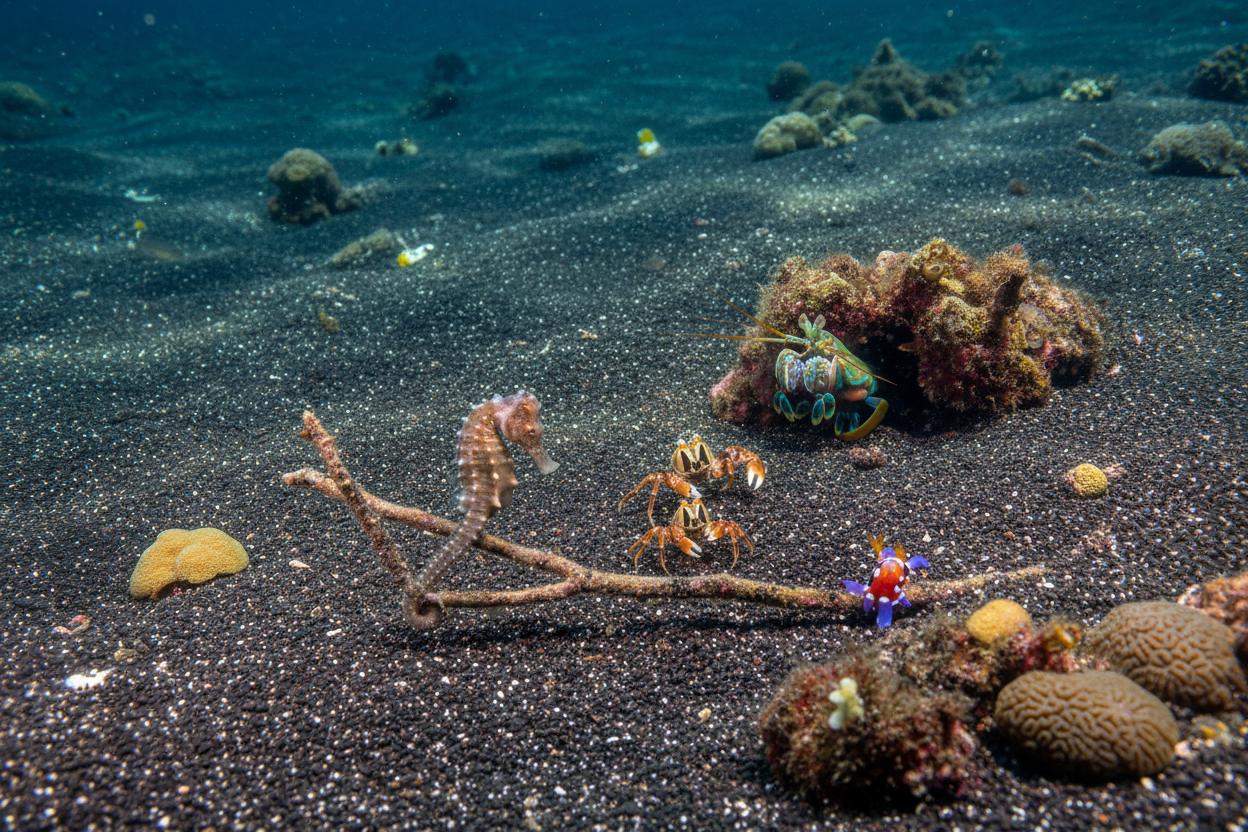
Sidem
Slightly further down the coast from Batu Belah in a quiet, traditional village bay. Sidem consists largely of fine volcanic sand slopes with scattered rubble, known as "muck diving at its best." An excellent site to spot rare critters including ghost pipefish, mimic octopuses, and harlequin shrimp. Because of the fine sand, good buoyancy is highly recommended to avoid kicking up sediment. Local dive centers frequently combine Sidem and Batu Belah into a single two-tank morning trip.
Boat Entry (Jukung)
Boat Entry Dive Sites
Spectacular sites beyond the bay, reached by traditional Balinese jukung boat
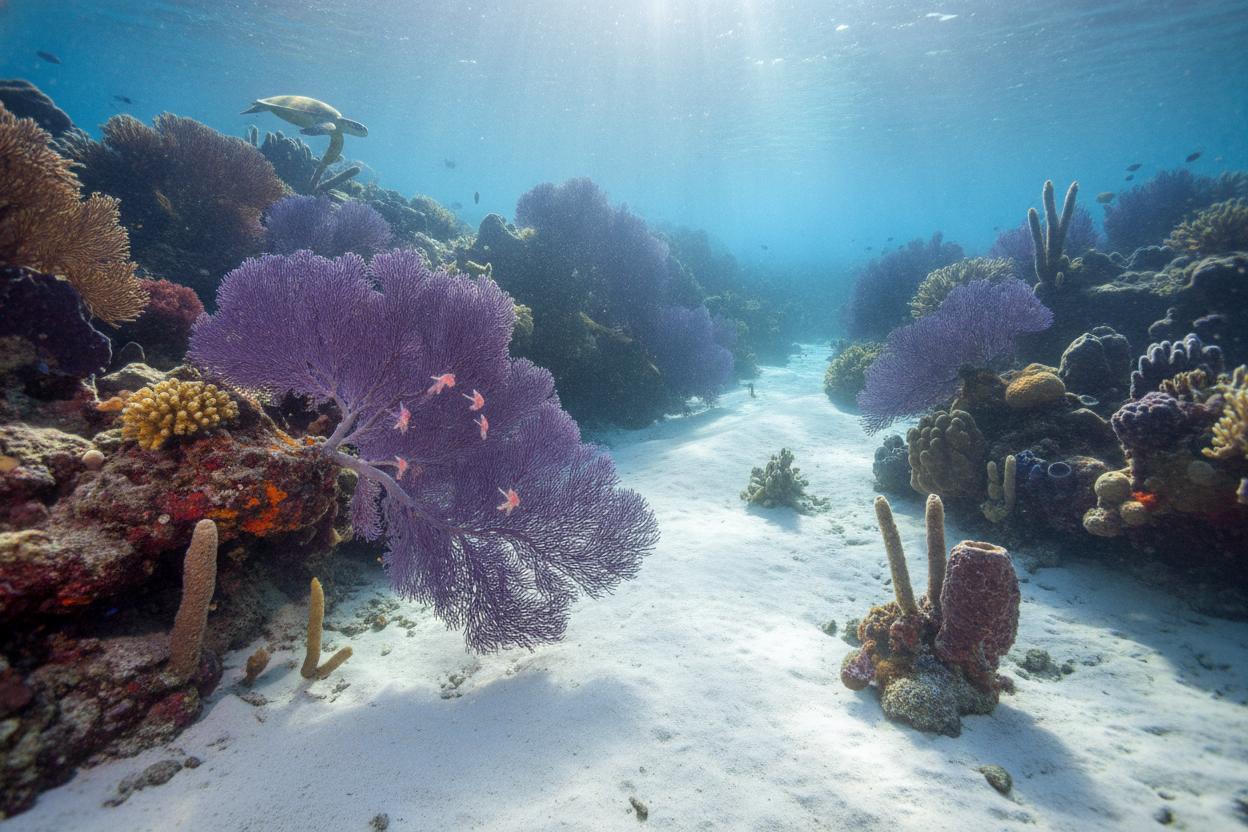
Alamanda
Located between Batu Kelebit and the Drop-Off, Alamanda is accessed by traditional jukung boat. The site features an underwater valley topography with a gently sloping white sandy bottom. Large purple gorgonian sea fans are the main attraction, where each one is carefully inspected for the tiny pink Hippocampus bargibanti and Denise pygmy seahorses that call them home. Almost no current makes this a relaxed yet rewarding dive.
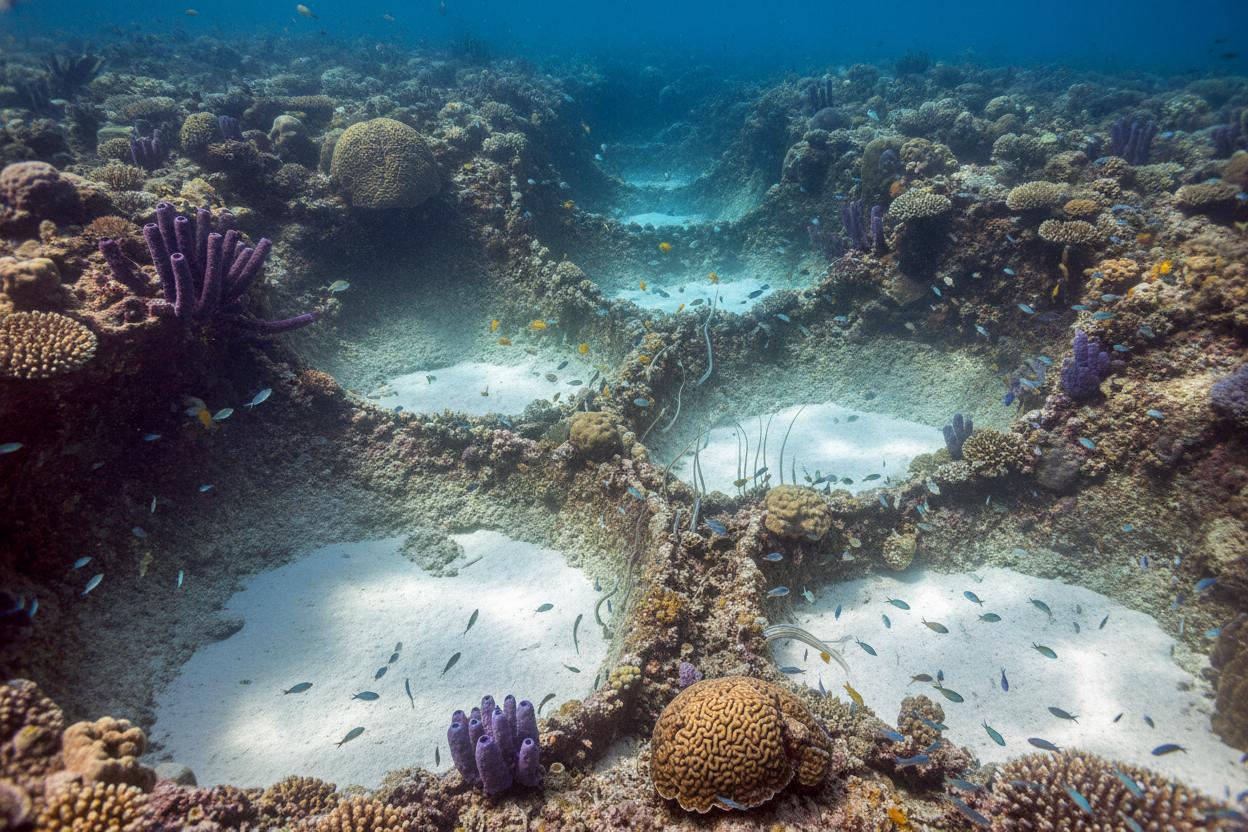
Palung Palung
"Palung" means trough in Indonesian, and this site lives up to its name with a series of 6 rocky ridges and 5 intervening bowls that create a stunning underwater landscape. Located just beyond the Drop-Off, this mostly untouched site features brain corals, honeycomb corals, rose-colored branching corals, and purple tube sponges. Garden eels poke from the sandy bottoms of the bowls, while bumphead parrotfish, turtles, and reef sharks are regular visitors.
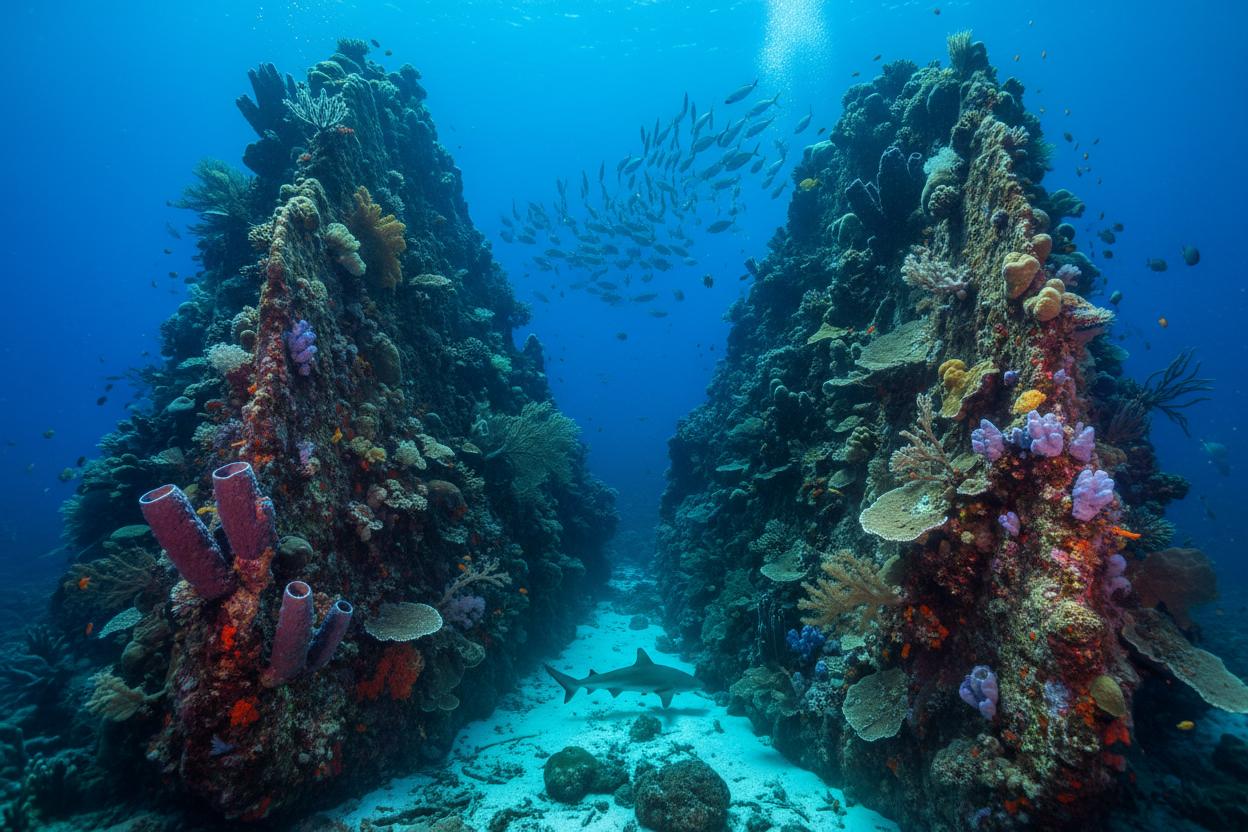
Batu Kelebit
'Submerged Rock', two massive underwater rock formations marked by large boulders breaking the surface. A short 5-10 minute jukung ride brings you to this pinnacle where stronger currents bring nutrient-rich upwellings from the deep Lombok Strait. Three coral-packed spurs separated by white sand channels create an explosion of marine life: schooling trevally, barracuda, dogtooth tuna, reef sharks, and Napoleon wrasse. White tip reef sharks are known to circle divers curiously.
Emerald
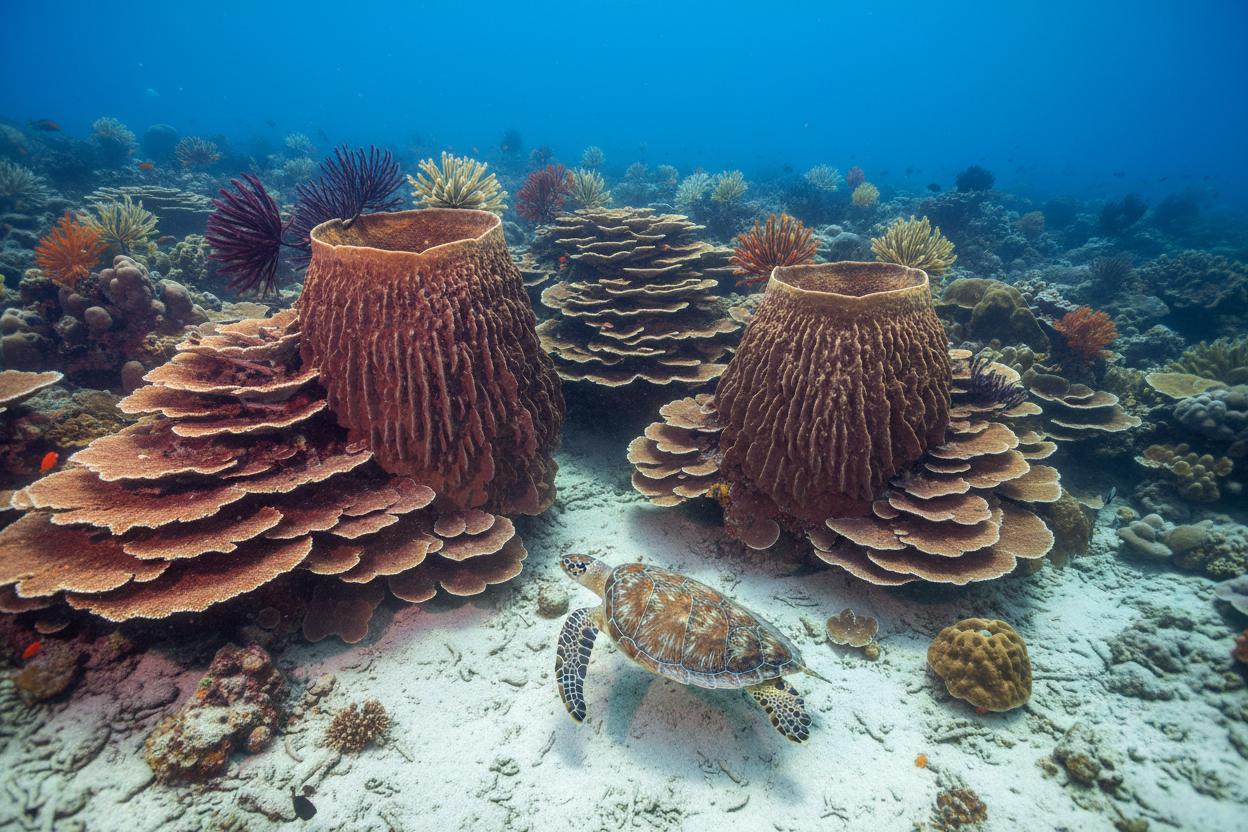
Located southeast of Tulamben Bay, just past Batu Kelebit. Emerald's lighter-colored sand and distance from the main entry points mean fewer divers and pristine coral. Giant elephant ear sponges over 2 meters high protrude from the slope, while layers of pinkish-orange plating corals canvas the reef. Sunken artificial structures including cars attract cuttlefish, gobies, and ornamental dartfish. Occasional reef sharks and turtles complete the experience.
Nusa Penida / Manta Point
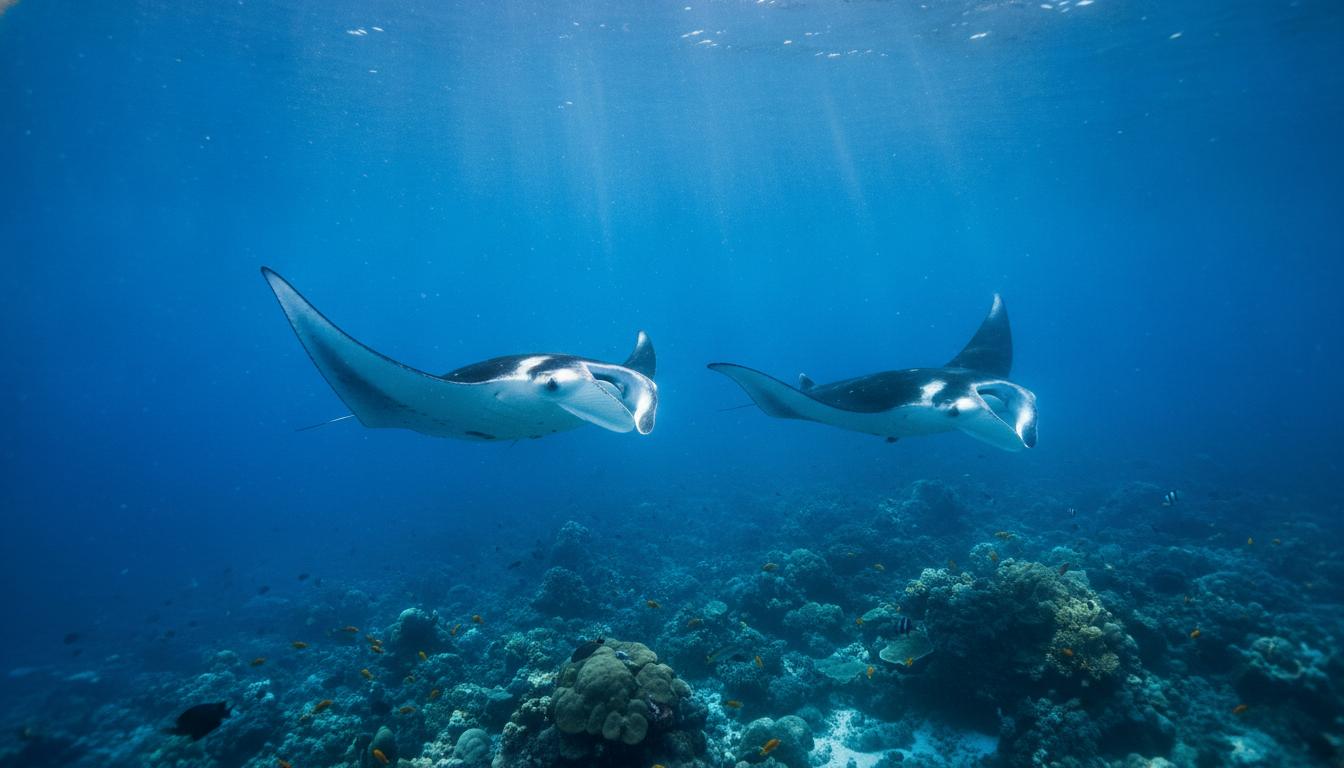
A full-day boat excursion from Tulamben to the world-famous Nusa Penida island. The highlight is Manta Point, where you have a high chance of encountering majestic oceanic manta rays swimming gracefully in their natural habitat. Crystal-clear waters, dramatic underwater cliffs, and thriving coral gardens make this an unforgettable dive experience. The trip includes 2-3 dives, with Manta Point as the main attraction plus vibrant reef sites around Nusa Penida.